|
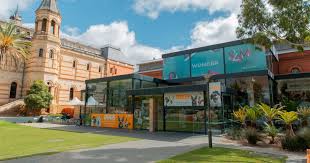
The Friends of Glenthorne feel very strongly against the proposed changes to the Staffing Structure at the SA Museum.
We hope you don't mind that we are forwarding to you all the following information about this, and we hope that you feel the same way too.
There is a lot to read, Sorry, but we really felt the need to keep you informed.
Table of Contents
Protest Rally this Saturday, April 13th
Write a letter of Support
Letter from Jan Forrest to Members of Parliament
Jan Forest - Attachment 1.
Jan Forest - Attachment 2.
Jan Forest - Attachment 3.
Email from South Australian Butterfly Association
Meeting with some SA Museum Staff concerning the Restructure
Email from: Gil Hollamby
From: Professor Allan Pring
InDaily article published online on 28 Feb 2024
List of Relevant Ministers to write/email to.
Protest Rally this Saturday, April 13th
This Saturday, April 13th at 11am, there will be a protest about these proposed changes to the staffing on the steps of Parliament House.
Why not bring the children, and make a day of it at the Museum, and North Terrace Precinct.
Write a letter of Support
We hope that you will send a letter of protest about the radical changes at the South Australian Museum to the Minister of Arts, the Premier, opposition leader etc.
Write individually to the Minister and Premier etc and local members to put pressure on them to halt the restructure of the Museum and to have a serious independent enquiry in which all of the stakeholders are consulted.
See the list of people to write to at the end of this email.
Letter from Jan Forrest to Members of Parliament
Jan Forrest OAM
30 Churchill Avenue,
CLARENCE PARK. 5034
SOUTH AUSTRALIA
23rd March 2024.
Dear elected Member of Parliament,
RE: PROPOSAL TO AXE SCIENTIFIC STAFF AND GREATLY REDUCE COLLECTION MANAGERS AT THE SOUTH AUSTRIAN MUSEUM.
My name is Jan Forrest, and I am in the unique position of having spent a lifetime at the South Australian Museum almost 61 years in fact. 47 years as staff, retiring as the Senior Collection Manager of the Terrestrial Invertebrate Collections. Since retiring I continue to volunteer at the Museum as an Honorary Associate.
The public details of the proposed changes to the South Australian Museum staff changes are sketchy and vague with no real substance regarding what these proposals will mean for collections, the Museum and the people of South Australia. We know research positions in the natural sciences are being axed and we know that collection manager numbers especially in the natural sciences are being reduced.
Rumour has it that the end game is that the Museum as we know, with a balance of natural science, earth sciences, Antarctic research and humanities will cease, and it will be largely taken over with content primarily relating to First Nations people. Is that what the South Australian community, your voters, want? I suggest very many people will not be happy about such a proposal. Please find out if this is the end game, personally I think it is important for the people of South Australia to know what is planned.
I urge every member of parliament to investigate closely these proposals and not blindly follow the lead of people who may not have the best interests of our priceless collections at heart.
Successive governments have spent millions of dollars of the taxpayer's money conserving habitat, planting trees and understory, sometimes conserving a special butterfly or parrot. Millions of Australians are passionate about the environment and are out there every day doing their bit to ensure the planet continues to be sustainable.
Information provided by the Museum in gallery exhibitions and to the environmental community needs to be based on knowledge. However, if we do not know what is in that habitat, what animals eat and live or what was there historically it is very difficult if not impossible to undertake conservation and species are destroyed before we even know they are there. That is what Museum collections and taxonomic research are for, and your Museum has a proud history of doing just that.
I am not a research scientist, so I am not pushing my own barrow however I have been in the position as the Collection Manager of over two million insect specimens and involved in several major exhibitions and the biodiversity gallery and have observed firsthand:
-
how important our collections are and how they support important conservation work by hundreds of South Australians including local ecologists, Department of Environment Landscape Boards, interstate and international researchers.
-
The importance research by the staff in the South Australian Museum that know about our animals with whom we share this planet, contribute to our knowledge of species.
-
how researchers and collections can contribute in the future to best ensure survival of species.
-
The significance a local knowledgeable team was, in creating major exhibitions and the biodiversity gallery.
I propose to provide you with information about the ENTOMOLOGICAL (INSECT) COLLECTION as well as an overview of the other natural science departments especially the significant holdings of types which is the one true reference for each individual species. I hope that this will provide you with an appreciation of just how devastating this recent plan will be to the continued maintenance of these collections and the knowledge Museum researchers would provide for future generations of South Australians.
If the plan to axe research and greatly reduce staff in collection management goes ahead the Labour
Malinauskas government will be remembered in history as the Government that destroyed decades of the South Australian Museum's proud history of research and South Australians will have one less thing to be proud about, as the fabric of our community is chipped away.
There are three questions and answers on the Museum website relating to the proposed changes that I challenge because I do not think the answers provided by Museum management, pass the pub test:
Is the Museum still going to do research?
Yes, absolutely. The proposed changes are not about stopping our research activities but about a new expanded model for research for the wider public we serve. The future focus will be on converting new discoveries and research into the visitor experience, both onsite and online, and refreshing that experience through new research
Response: If research scientists are sacked, what is this expanded model and who is going to make these new discoveries let alone convert them into a visitor experience with new research?
Has the Museum stopped collecting?
No, collecting will always be a core to our mission both to preserve and promote the scientific and cultural heritage of South Australia but also to support research and the visitor experience.
Response: If there are no researchers and less collection managers how will research be supported and who will collect this new material?
Will the Museum's galleries be changing?
There are plans to invite the South Australian public into a wider conversation about how we can update and refresh our galleries and spaces, expand the ways that we share our collections and knowledge, and how we better connect our communities to the Museum's research and collections.
Response: The cost to the government to create the new Biodiversity Gallery in 2010 was several million dollars. Does the Government have plans to fund and update Museum galleries when the priorities are to fix the health system If there are no researchers and reduced collection managers how will the suggested connection between the South Australian community with a non-existent Museum research program and down-graded collections be achieved?
So, l implore every elected representative in our state parliament to spend some time seeking information on the proposal put forward by the Malinauskas government and form your own opinion on the validity of the plans. Will it provide the very best outcome for the Museum, the community, and future generations of South Australians who you represent?
Yours sincerely,
Jan Forrest OAM
Retired Senior Collections Manager,
South Australian Museum. May 1963 - March 2010 Terrestrial Invertebrates Collections,
Honorary Associate March 2010 – present
The significance of the South Australian Museum Entomological Collection
Jan Forest - Attachment 1.
THE SIGNIFICANCE OF THE SOUTH AUSTRALIAN MUSEUM ENTOMOLOGICAL COLLECTION
This collection is one of the premier assemblages of Australian insects and springtails in the world, but also contains material from New Zealand, Asian and Pacific nations, and Antarctica. The collection has an impressive history, with oldest specimens dating back to insects gathered during explorations of inland Australia during 1840-1860.
The South Australian Museum entomological collection holds many significant historical collections and much of this material has been collected in areas that are now full of houses or crops and areas now devoid of native vegetation thus provides important information especially for Green Adelaide projects, a key initiative of this government.
For example. Following the re-discovery of the Lucia limbaria the Chequered Copper butterfly in the Adelaide parklands in 2011, the first place Butterfly Conservation SA members visited was the South Australian Museum collections to discover that this species had last been recorded on the Adelaide plains over 60 years ago. Following then to the herbarium to seek out host plant Oxalis perrenans records in South Australia seeking past and current distribution data.
Thousands of specimens collected and funded by the AS Dept. of Environment Biological surveys from every corner of the state make this and the vertebrate collections the most comprehensive library' of South Australian insects, spiders, mammals, birds and reptiles in the world.
When new species are created a 'holotypes' specimen is designated. This is the one true reference for this species. Specimens compared with the holotype are also retained as paratypes. The current South Australian Museum website cites that the entomology collection holds over 30,000 types and based on my experience I would suggest that includes around 8,000 primary types.
THE SIZE OF THE COLLECTION AND WHY WE HAVE DUPLICATE MATERIAL
The collection contains more than two million individual specimens and are housed on level 3 of the science building. In 2011 the dry collection contained 5500 drawers; around 900 drawers of spirit material (with between 30 vials to several hundred small vials per drawer); the microscope slide collection of around 20,000; and invertebrate material collected for genetic analysis stored in freezers at approximately -70°C.
Duplicate material of every species is collected and retained because the most important aspect of collecting is to ensure wide range of localities are sampled. Many species may look superficially the same are often different species once they are studied especially fi they come from different localities.
STORAGE, MAINTENANCE REQUIREMENTS and USE
Biological collections are prone to infestations of Anthrenus (museum beetle) in dry collections. Specimens can be destroyed within a few weeks. Ethanol evaporates and the spirit collections requires constant monitoring to spot a jar that has a broken seal causing specimens to dry out.
The proposal by this present government to limit the number of collection managers will mean the collections will, over time, potentially deteriorate. Constant and regular use by staff and researchers from interstate and overseas means the collection is constantly being monitored.
Reducing collection managers will inevitably reduce access by interstate and overseas researchers as well as local ecologists and Landscape Board staff in the Department of Environment. This would be a disaster for the scientific community worldwide because this and other collections in the South Australian Museum hold so many historical types and the collection is globally significant with daily requests for information from local, interstate and overseas researchers.
The attachment providing information on all the biological science collections demonstrates the proposal to reduce collection managers does not consider, the sheer volume of specimens that currently exist in the SAM collections and the workload required to adequately maintain each unique collection safely. I doubt if there will be time for collection managers to adequately answer questions from local, interstate and international researchers let alone assist or curate proposed new exhibitions.
DATA CAPTURE
A great deal has been made of the advantages of digitising data, and the proposal to spend large funds on this, is applauded however as the saying goes "rubbish in, rubbish out". The locality and identification of the specimen data needs to be verified and often a specialist in that family or group of animals (a researcher) is the best person to do this. Who are they going to ask if there is no-one with knowledge to confirm the data entry process? Others do not have this knowledge including highly paid administrators or IT specialists.
Because every pinned (dry) specimen has its own individual label and vialS of the same insect species collected at the same place is also labelled individually, databasing the entomological collections is a logistical nightmare. The numbers are daunting 2,000,000 specimens including 30,000 types. Possibly 10 - 15% has been databased however whenever there are changes to taxonomy this mean previous entries have to be altered, every specimen has to be re-unit trayed and re-labelled. It is time consuming and fiddly. This alone is an argument to increase collection managers, not reduce staff numbers.
MONITORY VALUE OF THE ENTOMOLOGY COLLECTION
All the Museum collections are priceless and irreplaceable especially original holotypes however regular valuations of the Museum collections take place with information provided to Valuer General Department. The collections are valued in the millions of dollars especially types - see below.
Below is information from the Museum of Victoria for costing premium types. This information is not dated however believe to have been provided for the 2011 valuation exercise:
TYPE PREMIUM
|
Cost Component
|
Specimen Unit
|
Unit Cost
|
1 Unit number
|
Cost
|
Holotypes, Syntypes, Lectotypes or Neotypes Comments
|
|
Writing of scientific paper
|
Staff Day
|
$294.00
|
20
|
$5,880.00
|
Staff Grade 5
|
|
Photography
|
Staff Day
|
$205.80
|
1
|
$205.80
|
Staff Grade 3
|
|
Analysis (CT, XRD, DNA etc)
|
Staff Day
|
|
|
$500.00
|
Staff Grade 2
|
|
Database
|
|
$156.80
|
0.2
|
$31.36
|
|
|
Total Cost per Specimen:
|
|
|
|
$6,617.16
|
|
This is calculated based on the cost of publishing a new primary type to replace on that has been lost or destroyed and includes four weeks of senior curator's time to prepare the paper, one day photographing each specimen, a flat rate for any specimen analysis, and updating the database.
Replacing non-type material is costed at around $5 - $10 depending on the species. Secondary types would have a lower value and around the $500 each mark.
TAXONOMIC RESEARCH -IT IS WHAT MUSEUMS DO
Not everyone knows everything but collectively in Museums around the world, the knowledge base is immense, and every time one Museum disappears, or 'restructuring' takes place to save money, slowly but slowly our knowledge base is diminishing.
Museums are the place where taxonomy takes place. This is the science of naming, describing, and classifying organisms and includes al plants, animals, and microorganisms of the world. This has evolved in Museums because researchers have access to collections and are in the position of being able to look at lots of different animals that may look the same but do not share the same habitat preferences or the same foodplant and come from different localities. Or conversely two animals that look totally different can be related and DNA has fine-tuned the superficial observations initially undertaken.
Why is taxonomy important? Taxonomy provides basic understanding about the components of biodiversity which is necessary for effective decision-making about conservation and sustainable use. https://www.cbd.int/gti/importance.shtml
The proposal to limit research in the South Australian Museum will reduce our institution to a bunch of galleries with no substance or science behind them and none of the stories about the animals that only a specialist knows from years of study and research.
THE PEOPLE
Museum researchers and collection managers observed over many years are not nine to five clock-watchers They are often in at 7am and leave when the lights go out. Work during weekends and take holidays in places where they can delve into their speciality of research, at their own expense. tI is a way of life, not just a job. South Australian voters benefit by their knowledge and passion. Every Museum has a group of these dedicated staff and honorary associates and to destroy this is to destroy the knowledge base of our natural world for future generations.
EXHIBITIONS
During my tenure at the Museum, I was involved in three major exhibitions and the Biodiversity Gallery on level 3of the Museum, al 'home-grown'.
Of these, the two butterfly exhibitions that I curated "Where have all the butterflies gone?" and "Bringing back the Butterflies" arguably were two of the most successful held in the Museum with the latter having an attendance record of 29,000 people. The exhibition "Opals" curated by Collection Manager Ben McHenry had an attendance record of 27,000 another 'home-grown' exhibition using Museum staff. I seriously doubt with the proposed reduction of collection manager numbers these staff will not have time to undertake any exhibition curation. The Museum collections are too important, and managers will be spread too thin trying to ensure collections continue to be monitored and maintained appropriately.
Before I retired, I headed up the content team for Biodiversity Gallery (seconded for two years from entomology). In the gallery are habitat cases and in addition stories in 15 concept cases. The content was all produced by South Australian Museum researchers and collection managers.
Without the depth of knowledge provided by staff, meaningful displays and exhibitions are not possible. To do away with these positions is madness especially if the aim is to produce world class exhibitions that South Australians can be proud of. To do that, you need world class researchers and they are home grown, in OUR museum and have been there for decades, the research record shows that.
Jan Forrest OAM 23rd March, 2024
Jan Forest - Attachment 2.
Summary of collection numbers of specimens/items/lots and types in Biological Science, Earth Science, EBU, Australian Polar Collection, Archives and Library.
Source the South Australian Museum website 3/24.
|
BIOLOGICAL SCIENCES
|
#specimens
|
Total types
|
|
invertebrates
|
|
|
|
Entomology
|
2,000,000
|
30,000
|
|
Arachnology
|
300,000
|
5,100
|
|
Parasitology
|
44,000
|
5,000
|
|
Marine Invertebrates
|
1,000,000
|
13,000
|
|
Total
|
3,344,000
|
53,100
|
|
Vertebrates
|
|
|
|
Ornithology
|
62,000
|
350
|
|
Herpetology
|
75,000
|
1600
|
|
Mammalogy
|
26,000
|
189
|
|
Ichthyology
|
13,000
|
200
|
|
Total
|
176,000
|
2,339
|
|
EARTH SCIENCES
|
|
|
|
Mineralogy and Meteorites
|
32,000
|
|
|
20 Palaeontology
|
50,000
|
|
|
Total
|
82,000
|
|
|
AUSTRALIAN BIOLOGICAL TISSUE Collection
|
150,000 samples
|
|
|
AUSTRALIAN POLAR Collection
|
|
|
|
Mawson
|
100,000 items
|
|
|
Wilkins
|
100 items
|
|
|
Rymil
|
2000 items
|
|
|
Total
|
102,100
|
|
|
ANTHROPOLOGY and HUMANITIES
|
Figures not presently available on website
|
|
|
Australian Aboriginal Ethnology
|
n/a
|
|
|
Foreign ethnology
|
n/a
|
|
|
Archaeology
|
n/a
|
|
|
ARCHIVES and LIBRARY
|
|
|
|
Monographs
|
17,000
|
|
|
Rare books
|
2,300
|
|
|
journals
|
30,000
|
|
|
Photographic images
|
21,200
|
|
|
totals
|
70,500
|
|
Summary of the Museum collections
Jan Forest - Attachment 3.
Summary of the Biological and Earth Science Museum and Australian Polar collections mainly derived from South Australian Museum website. March 2024
BIOLOGICAL AND EARTH SCIENCE RESEARCH AND COLLECTIONS
BIOLOGICAL SCIENCES
TERRESTRIAL INVERTEBRATES
Entomology - insects and collembola. 2,000,000 specimens. 12. million pinned insects, 500,000 specimens preserved in ethanol, 20,000 on microscope slides. 30,000 types with approximately one third of these primary types. Historically important. Thousands of specimens added by the SA Dept. of Environment Biological surveys from every corner of the state make this (and the vertebrate terrestrial collections) the most comprehensive collection of South Australian insects in the world.
Arachnology - mites, ticks, spiders, centipedes, and millipedes. 300,000 specimens including 200,000 spiders stored in ethanol. Significant mite collection of 45,000 specimens, approx. 5000 scorpions and 3600 millipedes. 5100 types including around 850 primary types. Historical collections include Womersly, Southcott, and Lee.
Parasitology - Helminths, parasite worms etc. includes the Australian Helminthological collection. 44,000 specimen lots of representatives of over 3600 parasitic taxa collected from over 2400 host taxa. Parasitology collection collected over 130 years. 5,000 types.
Marine Invertebrates - molluscs, crustaceans, worms, sponges, jellyfish, corals, sea anemones, sea stars and sea urchins. Represents 23 phyla, more than 1,000,000 specimens including 13,000 types (17,00 holotypes). 33,000 registered lots and 14,00 microscope slides. Takes up 2/3 of level 2 of the science building. Significant collections include Verco and Ashby Col. and material from deep sea trawling.
Considered the most comprehensive reference collection of South Australian marine organisms in Australia.
VERTEBRATES
Ornithology - birds. 62,000 specimens, dry bird skins, mounted animals, skeletons, and whole animals preserved in ethanol. Nests and clutches of blown eggs. 350 type specimens. Commenced in the mid-19thcentury driven by curator Frederick George Waterhouse. Collections include White, MacGillivaray, Parsons, Morton/Oakley, and Eckert.
Herpetology - reptiles and amphibians. 75,000 specimens mainly animals preserved in ethanol plus skeletal collections. Mostly South Australian with representation from Melanesia. 1600 type specimens. Significant frog collection from New Guinea.
Mammalogy - mammals. 26.000 specimens (92% Australian material, foreign material mainly from the zoo). Col. includes articulated and disarticulated skeletons, mounted, flat and study skins, baleen, organs, bulk bone material and regurgitated owl pellets. Tissue samples. 189 type specimens. 2000 specimens represent 45 different species. The cetacean component is stored at the Museum's Bolivar facility. Extinct species are represented including x5 Thylacine.
Ichthyology - fish, sharks, rays etc. 13.000 registered lots (single specimen or several specimens of the one species. Date from the late 1800s. Includes approx. 200 type lots.
BIOLOGICAL SURVEYS It should be noted that huge collections (with substantial financial investment made by several different governments) were made by the Department of Environment over a 20-year period 1990 to 2010 undertaking biological surveys throughout South Australia to build up a base line picture of the South Australian fauna. All this material was lodged in the South Australian Museum in every section of the Biological Science departments.
EARTH SCIENCES
Mineralogy and Meteorites - rocks, minerals, and meteorites. 32,000 specimens. Examples from Burra, formations of the Middleback Ranges and quartz from White Rock quarry in the Mt. Lofty Ranges. Oldest Moonta and Wallaroo copper mines, Olympic Dam Copper, gold, uranium deposit, Precambrian iron mineral specimen traced to 1865.
Meteorites has representatives from more than 150 Aust. and overseas meteorites including two Marian meteorites and the amino acid-bearing Murchison meteorite from Victoria. South Australian legislation designates that all meteorites found in the state must be lodged with the SA Museum collections.
1500 specimens and lots of tektites including 580-million-year-old Acraman impact horizon from the Flinders Ranges.
Palaeontology - fossils. 50,000 specimens. Include Ediacraran biota, SA Cambrian invertebrates, Late Triassic plant fossils, Early Cretaceous Marine vertebrates and invertebrates including opalised fossils. Tertiary invertebrates and Tertiary and Pleistocene vertebrates.
Subfossil collections include 76 mammal species from 25,500 individual remains of many extinct species.
EVOLUTIONARY BIOLOGY UNIT
Biological tissue collection - one of the largest wildlife tissue collections in the world. Over 500 new species discovered in recent times due to this amazing facility and the staff that run it. To be closed apparently.
AUSTRALIAN POLAR COLLECTIONS.
Consist of three main collections the prime one being Mawson with 100,000 items although the Wilkins collection is the oldest donated in 1920's with 100 items. Rymill collection acquired in 2005 with material from the Arctic and Antarctic around 2000 items.
Information on ANTHROPOLOGY, ARCHAEOLOGY, FOREIGN ETHNOLOGY and HUMANITIES is presently not available on the Museum website. However these collections are world renowned. The Australian Aboriginal Ethnology collection is considered to be the premier collection of this material in the world. We need a new facility where first nation's people can display and tell their stories in their own way however this should not be to the detriment of the other significant collections held in the South Australian Museum and their stories.
Jan Forrest OAM
23 March, 2024
Email from South Australian Butterfly Association
Gil Hollamby, Butterfly Conservation Society of SA
Mike Burrell, Field Geology Club, Native Orchid Soc of SA, SA Museum Volunteer, Malacology Society of S.A
Professor Allan Pring previous Mineralogist at the SA Museum
We have recently learnt that research and collection management in natural sciences at the South Australian Museum are under threat in a proposed staffing restructure. As this is an issue that could adversely affect, however indirectly, the conservation of our natural environment and biodiversity, our Association/Club will be preparing a response to send to the Minister concerned. Any members who wish to contribute by writing to their local member or to the Minister, or to newspapers, talk-back radio, or to social media, are encouraged to do so; contact details are given below.
Background information on the Museum and the proposed restructure is also appended, to assist in preparation of responses.
Interviews with Tim Flannery given on ABC Adelaide Breakfast (available on ABC Listen) and in the online newspaper InDaily, both on 28/2/2024, are well worth listening to or reading for further insights.
Meeting with some SA Museum Staff concerning the Restructure
Proposed changes to Research and Collections staffing in Natural Sciences at the South Australian Museum
At a staff meeting on 26 February 2024, Management of the South Australian Museum presented a new staffing structure for Research and Collections, as part of their plan of ‘Reimagining the Museum’.
In this new structure, staff in the natural sciences are to be reduced by more than 50% compared with current levels, while those in human cultures will increase. All current R&C staff in natural sciences (22 positions, including 3 currently vacant position) will lose their current jobs and then may apply for one of five new collection manager and five new curator positions (generally at a significantly reduced salary). Already, natural sciences staff have been told that there is a moratorium on applying for research grants, on publishing scientific papers, and on adding specimens to the collections.
The SA Museum, founded in 1856, has employed research staff in natural sciences continuously since the 1880s. They have contributed enormously to the understanding of our native fauna and geology, knowledge which is provided to the public, for example in identification of agricultural insect pests, or details included in field guides for identifying frogs or birds, or in the Museum’s exhibitions such as the Biodiversity Gallery, the Minerals Gallery, and the fossils galleries. Research into biodiversity and our natural environment is a core pursuit of all world-class natural history museums.
The last two decades, the science researchers have brought over $20 million dollars of grant funding to Museum projects, employing about 100 early-career researchers and other staff. For example, the Museum’s 2018–19 Annual Report shows that grant funding totalled $3,818,822 across 11 grants, and that 135 peer-reviewed papers were published and 17 conference papers presented in that financial year. To place a moratorium on applying for future grants cuts off a major funding source for Museum science. To forbid scientific publishing means that there will no longer be a permanent, verifiable record of the Museum’s research. Descriptions of new species will cease, because to be valid they must be published in appropriate documents (usually scientific journals or books) that meet criteria for availability and permanence. Staff have been told that future ‘research’ is all to be focused on informing exhibitions and public programs – such research is short-term and ephemeral and of no lasting benefit to the environment and conservation.
Museum Management has claimed that current research staff undertake university-style research and that this should be left to universities. This is a distortion of fact: museum scientists principally work on collection-based research, an activity rarely undertaken by university researchers. But if museums ceased all research on their collections, universities are unlikely to pick up the shortfall.
The natural history collections at the SA Museum are a permanent record of South Australia’s fauna and geology, the only comprehensive collection of such in the world. Their continued maintenance is vital, and to keep them ‘alive’ with chronological continuity, they must be added to, particularly in times of unprecedented environmental change. The legislated South Australian Museum Act 1976 stipulates that the functions of the Museum Board (and therefore the Museum) are:
-
to carry out, or promote, research into matters of science and historical interest; and
-
to accumulate and care for objects and specimens of scientific or historical interest.
To prevent future acquisitions and additions to the collections is to neglect a core duty of the Museum.
Looking at details of the staff restructure, we see that some sections of the Museum are particularly badly hit. The vertebrate collections, that include mammals, birds, herpetology (reptiles + amphibians) and fishes, ideally require four full-time collection managers to maintain them. Currently they have 2.6 full-time-equivalent staff, and in the new structure these will be replaced by one person only. This workload will be beyond the capacity of one person to maintain, and current functions such as making the collections available to visitors, including the public, will cease.
Worse is the complete closure of the Museum’s molecular unit and redundancies of its four staff. Over the past 40 years, this unit has published some 750 papers, described more than 500 new species, including 46 now listed as threatened, and secured more than $20 million in grants and industry support. Their collection of frozen tissues, for DNA and other molecular analysis, is the oldest, biggest and best in the southern hemisphere and is used, on a fees-for-service basis, by researchers all over the world. With its staff made redundant, it is not clear what will happen to the frozen tissue collection.
Current staff will be offered packages or redeployment or may apply for the new positions. It is likely that many will move elsewhere as the pay scales on offer are mostly lower than current levels and/or because the new positions are an inappropriate fit. Several of the 10 new positions may therefore remain vacant in the short term. Given the Museum’s track record of not replacing most retiring or departing natural science staff in recent years (currently down from 16 scientist to 8 before the current crisis), it is feared that these vacant positions will remain unfilled in the longer term, increasing the huge workload of the few appointed staff, and placing the collections and research in further jeopardy. Given the likely exodus of experienced current staff, the loss of centuries of combined corporate knowledge about the collections and their care may prove catastrophic.
In an era of recognised environmental and climate change, and of continuing environmental degradation and loss of species and biodiversity, it is imperative that research into our natural history should continue and be supported, not decimated as proposed by SA Museum Management.
Email from: Gil Hollamby
President - Butterfly Conservation SA)
To: Members of the Butterfly Conservation SA
Subject: Radical changes at the South Australian Museum
Date: 10 March 2024 at 10:28:29 AM ACDT
Dear BCSA Members,
At this month's public talk Mike Moore informed us of the major redevelopment planned for the South Australian Museum and how it will impinge on, if not completely emasculate Natural History research in SA. What he said was new to most of us in BCSA and is greatly worrying.
His concern has been corroborated by eminent scientists and museum volunteers. Ones who have insider knowledge, Professor Allen Pring, Mineralogist, and Michael Burrell volunteer at SAM for Marine Invertebrates.
Their knowledge of and concern for this SAM revamp are expressed in the emails following.
Note that there is urgency for action as decisions will be made in Parliament fairly soon. Read these emails and use the attachments to formulate your concern and send it in writing to your local member, Premier, Opposition Leader and others of influence.
Regards,
Gil Hollamby, BCSA Membership Officer
From: Professor Allan Pring
Staff at SA Museum 1984-2014
We hope that you will send letters of protest about the radical changes at the South Australian Museum to the Minister of Arts, the Premier, opposition leader etc. We ask you to encourage your members to write individually to the Minister and Premier etc and local members to try to put pressure on them to halt the restructure of the Museum and to have a serious independent enquiry in which all of the stakeholders are consulted.
There are really two issues in the Museum restructure, which will be the most radical changes to the SA Museum since the1880, when they first started employing professional scientists to build and research the biological collections.
The first issue is the attack on the Natural History collections and research, all of the current research and collections staff are being made redundant and only a few will be offered new jobs positions. The Natural Science collections, particularly the biological collections, are effectively being put into care and maintenance with a moratorium on additions to the collections and original research.
The second issue is that the Museum is adopting a First Nations First theme. This bit is more speculative but it appears that all of the current displays in the Museum will be gutted and the Museum exhibitions will be redone. Rumor suggests that there will be five main galleries based on the regions of South Australia, Adelaide region, Murray-South East, Flinders Ranges, the Deserts and Ocean country. The exhibitions will present a First Nations view of these lands, with their myths and legends and their views of the fauna and landscapes. It is unclear how much science, if any, will be in these galleries. We don't think there will be dedicated fossil and mineral galleries or a biodiversity gallery explaining evolution. So effectively the Museum is to become a First Nations Cultural Gallery. Planning for such a transformation has apparently been going on for the last 8 months or so inside the Museum.
Redoing all of the Museum displays will cost a lot of money - the current AACG opened in 2000, cost $6 Million to do. So to do all of the galleries will cost $20 to $30 Million. If the Museum becomes a first nations cultural gallery what about the lot 14 project? Are we to have two FNCGs on North Terrace - clearly not - we feel that the State Government will cancel the Lot 14 project and use the funds to make the SA Museum into the First Nations Cultural galley. This process is all being driven by Mr Kim Cheater, the Chairman of the Board, a former managing partner in the discredited consulting firm Price Waterhouse Cooper, a man who appears to have no Museum experience and or interest or knowledge of science. The Museum Board has no one on the Board who has any museum experience.
Really the Board needs and senior management of the Museum need to be removed. Transforming the SA Museum to a First Nations Cultural gallery will in the end please few people. Adelaide will be left without a Natural History Museum (one of the finest in Australia) and the First nations people will be left with a Cultural gallery that they do not control in a colonial set of buildings.
Thanks for doing this, feel free to distribute this email and attachments to your members and other societies.
Allan
Professor Allan Pring
(Mineralogist at the SA Museum 1984-2014)
InDaily article published online on 28 Feb 2024
Website: https://www.indaily.com.au
Tim Flannery warns SA Museum restructure could 'destroy' the institution
Internationally renowned Australian scientist Tim Flannery has warned of the “death” of the South Australian Museum if it continues in its current direction, after staff were told that all research positions would be abolished as part of its restructure.
Charlie Gilchrist
Feb 28, 2024, updated Feb 28, 2024
The acclaimed scientist, researcher, explorer and climate advocate told InDaily that “from my understanding of it, the kind of direction that is being set for the South Australian Museum could result in the death of an institution – one of the most important institutions in the state”.
Flannery was director at the SA Museum from 1999-2006 and was principal research scientist in mammalogy at the Australian Museum from 1984-1999. He was named Australian of the Year in 2007 and has been described by David Attenborough as “in the league of the all-time great explorers like Dr David Livingstone”.
An internal museum document seen by InDaily shows the SA Museum is proposing to abolish all 27 ongoing positions in the Research and Collections Division. In their place, 22 new positions will be created: 10 will be dedicated to curatorial research, 10 for collection management and two focussed on digitisation, access and preservation of the SA Museum’s collections.
Speaking to InDaily, Flannery said “the collections are there for research, and without research, the collections wither and die, and with that the museum withers and dies”. “It is extremely important that you have knowledgeable people researching those collections in perpetuity,” he said.
“Being a researcher in a museum like South Australia is like being a high priest in a temple. You have been passed on the sacred objects by your predecessor who has looked after them through their career. That chain of care goes back to the foundation of the state of South Australia – the foundation of the museum… but break the chain of care and you destroy the museum.”
Speaking about the importance of museums in the 21st century, Flannery said that “museums are the repositories of indisputable fact” where objects can be interrogated and analysed. “All the information is there. These are our corpus callosum. They’re our memory – indisputable memories of our civilisation – and it is absolutely critical that they are built upon and researched properly and cared for into the future,” he said.
“Without that repository of indisputable fact, we lose ourselves, we lose the meaning of our place in the world today, we lose our past, and we lose the potential for future research, future understanding of things we don’t possess today, but which may be critically important to the future.”
The museum document – a PowerPoint presentation given to staff on Monday – said that “[w]hile it proposed that all ‘current’ roles are abolished, it is intended that as many ongoing employees as possible will be placed in the new structure at their substantive classification level, where this meets the requirements of the new structure”.
In a statement, SA Museum CEO Dr David Gaimster said that “[a]t the end of this process, if current employees are not placed in the new structure, they will be redeployed to other roles and provided with career transition support. The proposed loss in full-time equivalent positions is five (27 to 22).”
“No staff member will be put into a lower grade role. Our commitment is finding suitable roles either in the structure or across the sector at current levels. For ongoing employees looking to go into a role at lower grades we have policies to support income maintenance,” he said.
The presentation said staff consultation would be open until Good Friday, March 29, after which a final organisational structure will be presented and staff could express interest in the new positions.
The current research positions at the museum range from a Senior Researcher of Terrestrial Invertebrates to a Collections Manager of Archaeology & Restricted Material, a Researcher into Aboriginal Culture & Art to a Senior Researcher into Paleontology, among other roles.
The SA Museum has been undertaking research since its establishment in the 1800s. According to the 2019-20 Annual Report for the South Australian Museum Board, in that year research grant funding totalled $2,880,134 across 33 grants. The report said that a total of 152 publications were produced by the SA Museum, including 135 peer-reviewed papers and 17 conference papers.
According to the Public Service Association of SA, the main union representing public service workers, SA Museum researchers have discovered more than 1000 new species, including 46 now listed as threatened.
The SA Museum’s website states that “[o]ur research activities not only benefit, inform and inspire the Galleries and many of the Exhibitions on display at the Museum, but have an impact that reaches far beyond the buildings we occupy in Adelaide”.
“The academic research status of the South Australian Museum is strong among museums nationally,” it states.
“It is a leader in remote and regional community engagement, and in Australian Aboriginal heritage and scientific research.”
The South Australian Museum Act 1976 states that one of its core functions is “to carry out, or promote, research into matters of scientific and historical interest” and “to accumulate and care for objects and specimens of scientific or historical interest”.
The proposed replacement positions will be primarily curatorial and collection management roles. This includes roles such as Curator of Historical/World Cultures, a Collections Manager of Archaeology & Restricted Material and a Curator of Mineralogy.
InDaily previously reported that the new SA Museum chief executive Dr David Gaimster plans to shake up the museum by rethinking its layout, creating a larger temporary exhibition space and rotating current permanent exhibitions.
Speaking previously to InDaily about the research undertaken at the museum, Gaimster said “we’re a very, very active research institution, and one of the most active in the Southern Hemisphere”.
“We have a dedicated team of researchers working in various areas of the biological sciences and human cultures; that work is extensive and every year we report that we publish around 150 or so peer-reviewed journal articles and conference proceedings and a whole range of different outputs,” he said.
“You could argue that despite all of that investment, all of that work, very little of that content is surfacing in the museum. We’ve basically got a research museum and a public museum, but there’s very little connection between the two. So, we’re not seeing the outcome of that work for our audiences.
“We’re rethinking that model of operation so that we can better connect our research with the public museum and enable our audiences to discover that new content and those discoveries and that research both on site and online going forward.”
The PSA said in a statement that “[a] push by the South Australian Museum management to decimate natural science research programs will result in the once-proud institution becoming more of a theme park than a serious contributor to ongoing scientific knowledge”.
“Included among the staff whose roles will be axed are world-class scientists undertaking cutting-edge DNA research on the collections,” it said.
It said that the 22 “mostly lower level positions… bear little resemblance to the existing roles” and that “[t]his effectively pushes out many of the research staff who have made a significant contribution to advancing scientific knowledge over many years”.
The statement said there was minimal consultation with staff members, and no apparent consultation with broader stakeholders or long-term research partners during the museum’s internal review of its science and research programs.
It also said that local, interstate and international research partnerships will cease under the new plan.
“PSA members working as researchers at the museum say jobs in the new structure have been downgraded, as the focus moves towards presenting more front-of-house exhibitions and increasing the Museum’s focus on First Nations cultural history,” the statement said.
“Staff also have concerns about how the museum’s existing collections will be maintained and managed should there be an exodus of experienced and qualified staff and with the move to broadening the curatorial and collection duties of remaining staff.”
In response, Gaimster said that during its review into Research and Collections operations, the Museum Board interviewed staff from every department to make an informed view. He said the museum was also at pains to alert stakeholders and research partners prior to the announcement.
Gaimster said that the museum will be able to continue maintaining and managing its collection.
“Currently we operate with a high degree of subject specialisation, which leaves many parts of our collections without management cover,” he said.
Concerns about the future direction of the museum have also been raised in parliament.
In parliamentary question time last week, Opposition deputy leader John Gardner relayed concerns raised with him by staff at the South Australian Museum about its future.
His questions addressed to Arts Minister Andrea Michaels related to the removal or dramatic change of museum exhibitions, the future of scientific study at the museum, the cutting of jobs under the restructure, underfunding of the museum, and the possibly that its evolutionary biology unit could be shut down.
The museum said that it will continue operating the Australian Biological Tissue Collection, but that it “is unable to continue to support the maintenance and staffing for the molecular lab based at the University of Adelaide”.
In one of his questions, Gardner asked whether the South Australian Museum would “continue to engage in scientific study and research under its new strategic plan,” explaining that research staff at the museum had been told not to apply for grants through the University of Adelaide, the Australian Research Council, or Australian Biological Resources study grants.
In response, Michaels said the museum would continue to undertake research, but that “what Dr Gaimster and the leadership team are looking at is more focussed research, in terms of matching that in with the curatorial and the exhibitions and telling our South Australian story”.
When asked whether staff members would be made redundant under the restructure, she said she was not aware of any moves in that direction.
“I’m not aware that any staff have been advised of that yet and quite frankly, I think that couldn’t possibly happen given we haven’t even gone through the public consultation phase of what the strategic vision is for the museum.”
In a statement provided to InDaily, Gaimster said that “[t]he Museum has a long and successful history in engaging in a wide range of research collections-related activities and this will continue.”
“What the Museum is looking at is how best to maximise the effectiveness of that research for the public interest and engagement.
“We will not reduce our investment in research, but will obtain better outcomes from it, particularly for the public. At the moment we are serving a narrow range of research interests. Going forward, we want to be at the heart of the knowledge economy. We intend it to be much more accessible and visible and deliver stronger outcomes for all South Australians.
“We have seen widespread positive feedback already in response to our Re-imagining announcement. The Museum has a very bright future and we look forward to engaging South Australians in our journey of transformation.
“The Museum remains fully committed to research and the promotion of matters of scientific and historical interest but this must be translatable for the benefit of all South Australians.
“The Museum will connect its audiences to its research and collections through gallery renewal, special exhibitions, digital platforms, public programs, and its wider engagement offerings.
“The South Australian Museum has hardly changed in the last 30 years and is at risk of losing relevance. The Re-imagining project and investment in curatorial and collections management capability represent critical steps in the creation of the compelling contemporary museum of the 21st-century.”
List of Relevant Ministers to write/email to:
Note: the SA Museum is in the Arts portfolio within the Department of the Premier and Cabinet.
Minister for Arts:
Hon Andrea Michaels MP
GPO Box 464
Adelaide, SA 5001
ministermichaels@sa.gov.au
enfield@parliament.sa.gov.au
Shadow Minister for Arts and Festivals:
Hon John Gardner MP
morialta@parliament.sa.gov.au
Premier:
Hon Peter Malinauskas MP
premier@sa.gov.au
croydon@parliament.sa.gov.au
Leader of the Opposition:
Hon David Speirs MP
black@parliament.sa.gov.au
Minister for Industry, Innovation and Science:
Hon Susan Close
officeofthedeputypremier@sa.gov.au
ptadelaide@parliament.sa.gov.au
Shadow Minister for Science and Innovation:
Mr Stephen Patterson MP
morphett@parliament.sa.gov.au
Member for Adelaide (in which electorate the SA Museum is situated):
Ms Lucy Hood MP
adelaide@parliament.sa.gov.au |